Why older adults resist help — and strategies caregivers can use to offer it
Understanding the fear behind “I don’t need help” can change how families approach care conversations
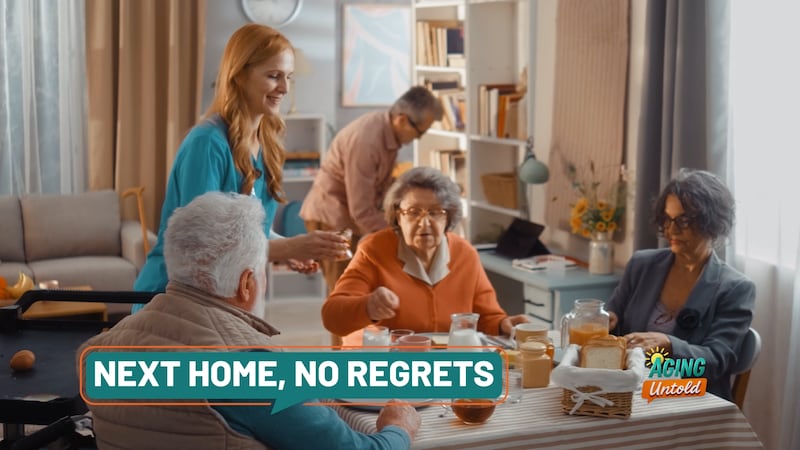
(Aging Untold) — When an aging family member says they don’t need help, the responses can mask real concerns, especially when they’re visibly struggling.
Sam Cradduck, a gerontologist, said the rejection often stems from generational values.
“We’re talking about a generation that was raised up to believe that help is weakness,” Cradduck said. “If I need help, I’m too weak, I’m too incapable.”
Many older adults were let down when they asked for help in the past, so they learned to do everything themselves, Cradduck said.
When ‘no’ really means ‘I’m scared’
“You have to realize as family members that sometimes no isn’t no, it’s I’m scared,” Cradduck said. “Our job is to make help feel like it’s safe and that it’s acceptable and it’s OK to need assistance.”
Cradduck said families often come in “like they’re the cavalry” and take over more than necessary.
“All of a sudden I just needed help getting the trash cans to the curb, and now you’re not letting me pay my bills,” Cradduck said.
Dr. Rhea Rogers, a board-certified physician, said older adults can feel like they’ve lost everything.
The loss of autonomy can trigger shame, especially when adult children who were once cared for are now providing care, Rogers said.
Medical and emotional factors
Cognitive decline can also play a role in resistance to help, Rogers said. Damage to the temporal lobe can prevent someone from recognizing they have an issue.
“So you don’t see yourself as needing help,” Rogers said.
Amy O’Rourke, an aging-well expert, said denial is a stage of grief.
“You’re grieving a loss that you can do things on your own and that you need help,” O’Rourke said. “Processing that grief and getting out of denial is often helpful.”
And some older adults simply don’t want a stranger in their house, O’Rourke said.
How to approach the conversation
Katherine Ambrose, an aging-well coach, said families can use leverage from medical professionals, such as telling a parent the doctor recommended a certain number of hours of home care.
But pushing too hard will backfire, she said. People fear losing control more than they fear the actual problem.
“The more you push, the more they’re going to push back, because it feels like I’m being managed, I’m being controlled,” Ambrose said.
Cradduck recommended taking it one step at a time and offering choices.
“Hey, Mom, we need to get a housekeeper in. Can we get a housekeeper in one day? Just one day a week for a short period of time. Tuesday work? What about Thursday?” Cradduck said. ”Let choices happen.”
Five key takeaways
- Understand the generational mindset: Many older adults were raised to view asking for help as weakness and may have been let down when they sought assistance in the past.
- Recognize fear behind refusal: When an aging loved one says “no” to help, it often means “I’m scared” rather than a true rejection of assistance.
- Avoid taking over completely: Coming in “like the cavalry” and controlling too many aspects of their life can cause shame and resistance. Focus on specific tasks they actually need help with.
- Consider cognitive factors: Cognitive decline or early dementia can prevent someone from recognizing they need help, making medical evaluation important.
- Offer choices, not ultimatums: Present help as options they can control (which day, which tasks) rather than pushing a predetermined plan. People fear losing control more than the actual problem.
Copyright 2026 Gray Media Group, Inc. All Rights Reserved.