Better than blood? Researcher says new discovery could help save lives
Dr. Cuthbert Simpkins says VBI-1 survived mouse tests and could end blood shortages; a transfusion specialist says blood will still be needed
KANSAS CITY, Mo. (InvestigateTV) — A doctor and research scientist at the University of Missouri-Kansas City said he has discovered a potential alternative to blood transfusions for people with severe blood loss. He calls the treatment “better than blood.”
When someone experiences severe trauma, such as a car crash or gunshot wound, they risk bleeding to death.
Blood transfusions are currently the best treatment to try to stop severe blood loss, also known as hemorrhagic shock.
How the discovery happened
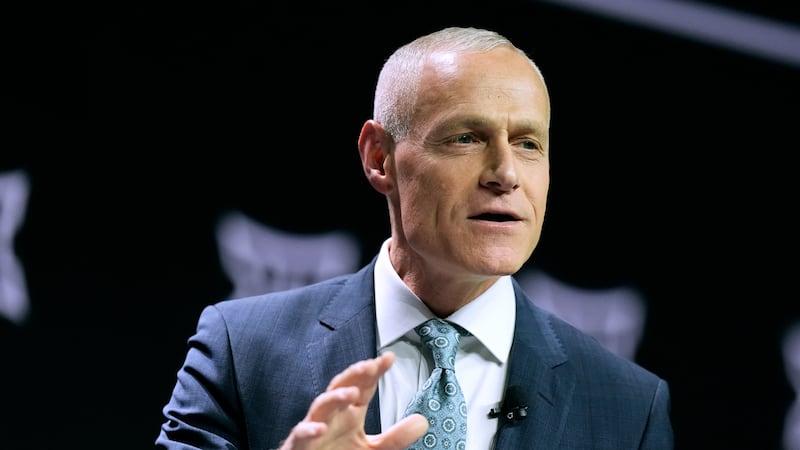
Dr. Cuthbert Simpkins, founder of Vivacelle Bio, said he was running an experiment he thought would fail. “But it didn’t fail.”
For years, Simpkins, who is now a surgery professor at the UKMC School of Medicine, had been trying to find an answer for septic shock and focused his research on blood experiments.
He drained mice of their blood until they were clinically dead, then injected them with a substance called VBI-1.
“The mice woke up. They woke up from being dead,” Simpkins said. “They were walking around. I called my wife, excited. I said, this is working. This is what’s going on here. This isn’t supposed to work.”
Simpkins said the survival rate is nearly 100% when the product is injected into the arteries of mice experiencing hemorrhagic shock. He is waiting to test it on humans. He said a person could receive about 2 liters.
Simpkins said VBI-1 would end blood shortages with the hope they never happen again.
He said the substance could also be safer than blood alone for people in hemorrhagic shock. He and his team named the product “better than blood” because of ischemia reperfusion injury, which he said is caused by a person’s own blood being reinfused.
Ischemia reperfusion injury happens when blood is reintroduced to the body after blood loss. The oxygen in the new blood can create toxins in the body, which damage tissue, including the brain.
“When we infused our product, we don’t get that,” Simpkins said.
The substance uses nanoparticle technology. It is derived from another of Simpkins’ discoveries, VBI-S, which is awaiting FDA approval to help treat septic shock.
“If you look at the damage caused by blood to the brain when you infuse it, the animal’s own blood, and you compare that to our fluid, and you see no damage,” Simpkins said.
Simpkins said the components of VBI-1 are soybean oil, egg lecithin and egg yolk.
It sounds like simple ingredients, but he says combined they could fix complicated problems facing our country. Since 2020, U.S. blood supplies have reached “critically low levels” multiple times.
And in 2026, the American Red Cross announced a national blood supply crisis, only the second time it’s ever released that warning. Dr. Simpkins says his product would mean an end to these blood shortages.
Transfusion specialist cites limits
Dr. Richard Galbraith, a University Health KC pathologist and director of transfusion medicine, said the potential is there.
“If it works and if it’s safe, then it could be a boon for sure,” he said.
Galbraith said he was “extremely interested” and “hopeful” when he first saw Simpkins’ study on VBI-1. But he sees limitations.
“Having a completely synthetic replacement for blood that’s, I think, is extremely unlikely,” Galbraith said.
Galbraith said blood will still be needed and blood drives will continue to matter.
“It’s still critically important. There are many uses for blood beyond shock,” he said.
Galbraith said University Health goes through at least 500 units of blood a day. He said chronic blood shortages have affected the entire country for several years. He said patients with chronic blood disease and those with certain cancers would still depend on blood transfusions.
Galbraith said VBI-1 could help people in hemorrhagic shock and during blood shortages.
“This hopefully can be a means of saving those people,” Galbraith said. When asked whether it could help during blood shortages, he said, “Oh, I think, definitely.”
He said the product must go through appropriate clinical trials.
“We need to ensure it goes to the appropriate clinical trials to make sure it’s going to work and it’s going to help and that it’s safe,” Galbraith said. “And if those concerns are addressed and met, then I’m happy to use it in our patients too.”
Other possible uses
Members of Simpkins’ lab team said they are ready to prove the discovery.
“I don’t think transfusion’s necessarily something we ever thought we would optimize any better,” said UMKC scientist Nathan Carpenter.
The team said they have only begun to explore the product’s potential.
UMKC scientist Danielle Kinsey said the team hopes the product can be used to prevent organ rejection after transplants.
“We have this hope that it can be used in the process of transplantation, so specifically given to patients before they receive their transplanted organ with hopes of decreasing the immune response,” Kinsey said.
Asked how to categorize VBI-1, Simpkins said, “There’s no category. There’s no other. It’s a different new category, actually, of therapeutics.”
Simpkins said he does not know the limits of the substance, but remains confident it will save lives.
“We’ll be sending more people back to their families, back to their loved ones, and that’s really what it’s all about,” Simpkins said.
Clinical human trials for VBI-1 could take one to two years. Simpkins hopes the product receives FDA approval and is on the market by 2031.
Copyright 2026 Gray Media Group, Inc. All Rights Reserved.