Member of Dockum family reaches out to surviving participants of historic sit-in
Next month marks 62 years since an historic civil rights moment in Wichita spurred change across the nation.
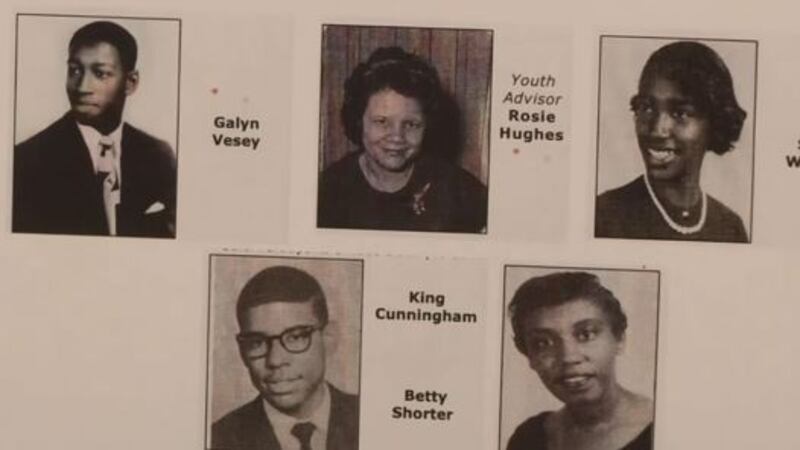
In July 1958, the Dockum Drug Store sit-in took place. The stand for equal rights led to the integration of segregated businesses across the U.S. The lunch counter sit-in was a peaceful protest that carried on daily for about three weeks until the drug store's owner gave in and served the African American protesters who were verbally harassed and denied service prior to the breakthrough.
Monday (June 8),
at what today is the home of the Ambassador Hotel at the corner of Douglas and Broadway.
"The way we fought was to be there, on those counters, let it be known we came there for service and we were not going anywhere until we got it, never knowing what might happen," Dr. Galyn Vesey, now 83, said of the decision to take a stand while sitting at the Dockum Drug Store.
Monday's story featuring Dr. Vesey reached the granddaughter of the man who owned the Dockum's Drug Store when the sit-in took place. After seeing the story, Tracy Harrelson, granddaughter of Robert Dockum, sent Eyewitness News a message asking how to contact the surviving sit-in participants to apologize for what they endured just to receive a bit of equal treatment at her grandfather's drugstore.
"I feel like this is a crucial step toward my part in seeking unity between my African American brothers and sisters and myself as a representative of the Dockum family," Harrelson says.
Harrelson says the injustices the sit-in participants and those they represented faced is not something she'll stand for.
"Express, you know, an apology to the ladies and gentlemen that were involved. I mean, to me, they're my brothers and sisters," she says. "I haven't met them, but I consider them brothers and sisters of mine because we all come from the same creator."
Although it happened when she was just eight months old, Harrelson recalls the history of the treatment African Americans often faced in businesses like her grandfather's drugstore. She spoke of the differential treatment, including making African Americans use paper containers instead of glass.
While she wasn't old enough to remember the defining moments of the Civil Rights Movement that took place at her grandfather's store, Harrelson says she feels a responsibility to apologize for what took place there.
"That is part of my heritage and so I feel, I guess I just feel a responsibility to encourage and to support and just to say I'm sorry for what happened," she says.
Some of the surviving Dockum sit-in participants are giving her that chance, agreeing to speak with Harrelson on Monday (June 15).
"It's been so many years and I'm sure they've walked through a lot of healing, but I just believe that this connection needs to happen," Harrelson says. "So I'm very excited about meeting them and being able to speak to them on Monday.
She says she believes God put her in a position to be able to apologize for what happened almost 62 years ago.
"He created all of us, and that we're brothers and sisters, no matter how you look at it, that's just how I view it," Harrelson says. "So I want to be part of that and connect personally with these individuals because I'm part of that history."